A Positive Control Is a Sample Known to Give
What is Positive Control. Verify that the negative results are valid Validate false-positive results Always give negative results Give positive results even when the procedure is not optimized.

Covid 19 At Home Testing And Pcr Rapid Testing Questions What To Know The New York Times
Positive controls in immunohistochemistry protocols are specimens containing the target molecule in its known location eg specific cell type intracellular compartment among others and whose histomorphology and cytomorphology can be visualized by a stain ie the fluorochrome of a chromogenic molecule.
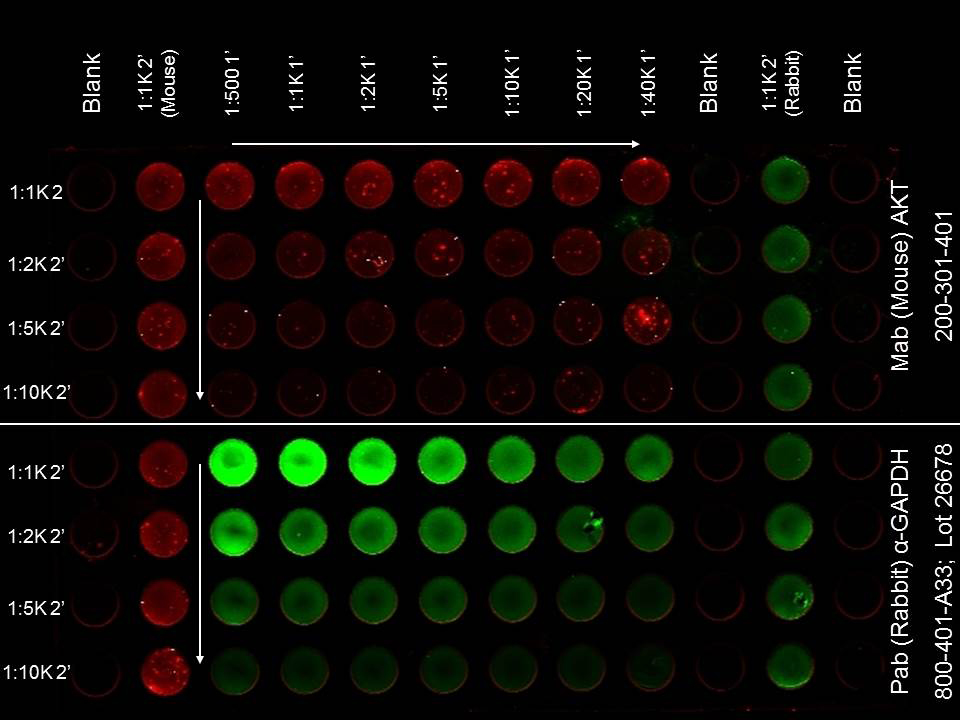
. The correct answer is D As a positive control to show if there are bighead carp present in the area. For example I was doing a genetics project where I was carrying out PCR a process that amplifies desired genes. Control Samples Control samples are any type of well-known forensic samples used to assure analyses are properly performed so that results are reliable.
Positive and negative controls for antibody validation. Positive control is an experimental control which gives a positive result. For this purpose known quantities of endogenous protein are being employed as a positive control.
A positive control is designed to always give a positive test. In microbiology there two types of test controls the positive and the negative control. It does not have the independent variable that researcher tests.
As for the concentrations of curcumin I am going to have 10 20 50 and 100 and two trials so 8 petri dishes for my experimental set-up will be used. Your negative control should consist of tissues or cells where your target protein is known to be absent. Assay Control Experiment Negative Control Positive Control.
A Always give negative results b Validate false-positive results c Verify that the negative results are. Starch and water will be the best negative control. Positive control groups allow researchers to show that positive results are.
A positive control is when you test your experiment against something where you know what the effects will be. A positive control is a sample known to give positive results for the given test. HOME THEORY MEDIA MISSION A positive control is a sample known to give positive results for the given test.
A positive control is a sample known to give positive results for the given test. What is the purpose of a positive control. A positive control is an experimental control that gives a positive result at the end of the experiment.
The positive control a known sample of parasite DNA shows that the primers have attached to the DNA strand. This is because starch is broken down by HCl to monosaccharides in the Benedict test which is the test for reducing sugar. Negative control sample is a sample that will not give change in an experiment.
A Verify that the negative results are valid b Always give negative results c Validate false-positive results d Give positive results even when the procedure is not optimized. Control groups are not required for all experiments and are typically used in experiments with complex conditions. Biurets Test for Proteins Question 1.
I talked to my teacher about dissolving curcumin in water. The positive control is an experiment that involves the repetition of the test using working treatment. Positive control in an experiment is a control group that researchers use to show that an experiment is working as intended by using conditions that guarantee a positive result.
You should always use several positive and negative controls at the same time. By the unknown contaminant in a way that mimics the expected result of the positive control then the effect in the positive control and the experimental group may be indistiguishable from the control. What is a Positive Control.
The following are illustrative examples of a positive control. A negative test is always supposed to give negative results. A positive control is a sample known to give positive results for the given test.
This type of test always gives the result as a yes. Starch and water will be the best negative control. These type of controls can serve both as a general positive control for the assay as well as a control.
A positive control may also allow you to benchmark results against current practices. NEGATIVE CONTROL TEST Negative control must be at least one for each sterility test. However it shows the desired effect which is expected from the independent variable.
Recently there has been use of various molecular methods to detect the presence of environmental DNA eDNA has become a boon in the surveillance programs that is used to monitor the presence of invasive species in the aquatic system. Appropriate negative controls positive controls are included in either case using preparations known to be sterile. It is a good indication to know if the test works.
As for now my positive and negative controls are a disk saturated in iodine and just the disk respectively. A positive control is a group in an experiment that receives a treatment that is known to produce results similar to those predicted by your hypothesis. If it is positive something is wrong with one of the components of the test.
The positive control group is the set of individuals exposed to a substance known to cause an effect. If it is negative one of the components is faulty. What is the purpose of a positive control.
Positive Matrix Controls are samples of the same matrix as the unknown samples which are known to contain analyte ideally in known quantities. What is the purpose of a positive control. What is the purpose of a positive control.
Also called controls known samples and knowns these control samples are fully known to the forensic community with respect to composition identification source and type. Similarities Both a negative control and positive control are parallel experiments to a primary experiment that are based on a different population and treatment than the primary experiment. For example to assess a new tests ability to detect a disease its sensitivity then we can compare it against a different test that is already known to work.
The sample sizes used in the. This is done to detect problems with your experiment. A positive control is typically a treatment that is known to produce results that are similar to those predicted in the hypothesis of your experiment.
The well-established test is a positive control since we already know that the answer to the question whether the test works is yes. Verify that the negative results are valid. A negative control would be when you test the experiment with something you know will have no effect.
On the other hand a negative control is an experiment in which the. It is a duplicate experiment which helps the analyst confirms the correctness of the results of a particular test. Your positive control should confirm that your target antigen is expressed on the relevant cells and tissues.
Negative control is necessary to ensure that any growth in the media comes from the product itself. Positive controls are often used to assess test validity. The negative control a sample without.
Positive control is a useful proof to show that the protocols reagents and the equipment are functioning well. Biology questions and answers.
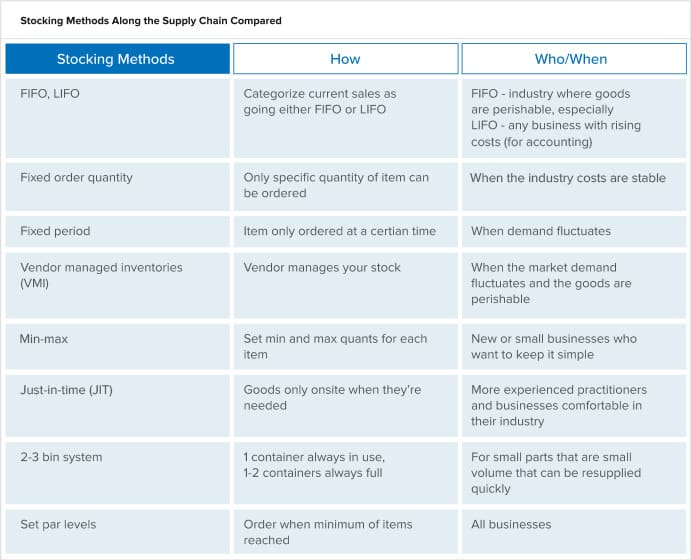
Inventory Control Defined Best Practices Systems Management Netsuite
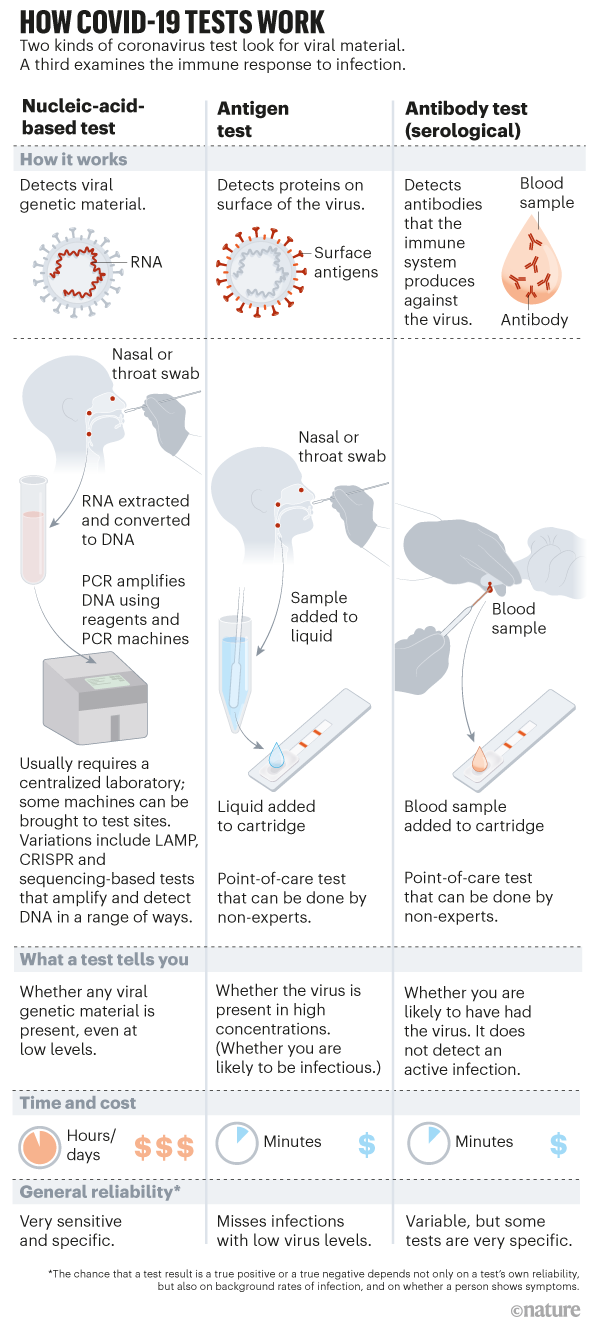
Rapid Coronavirus Tests A Guide For The Perplexed
2
Positive And Negative Controls Rockland
0 Response to "A Positive Control Is a Sample Known to Give"
Post a Comment